It’s Tuesday morning in Hamilton.
Your asset management team is three hours into what should be a routine compliance check. Excel files stretch across multiple screens. Pivot tables need rebuilding. Data from Clearwater requires manual reconciliation against investment guidelines that were written in legal language six months ago.
By lunch, they’ll have a snapshot of where you stand against your treaty constraints.
But by then, you might already be in breach.
The real problem isn’t compliance
Most Bermuda reinsurers understand that treaty investment compliance is existential.
When a ceding company specifies that you can’t hold more than 2% in equities or 50% in BBB-rated assets, breach those guidelines without prompt correction and you’re facing legal action from the cedant that may result in treaty termination.
But here’s what’s less obvious: this isn’t actually a compliance problem. It’s a data architecture problem.
Manual processes create dangerous delays between when breaches occur and when they’re detected. More critically, they don’t scale. Each new treaty brings its own constraints. What starts as manageable weekly work for three treaties becomes an operational burden requiring dedicated headcount just to maintain oversight.
The constraint isn’t computing power or software capability. Most reinsurers already have asset management systems, databases, and automation tools. The problem is that these systems don’t work together effectively.
From manual to systematic
Resolution Re discovered this eighteen months ago when they realised their team was spending more time building reports than managing risk.
Today, what used to require hours of manual work runs as a daily automated process. Every morning, they receive a compliance report showing exactly where they stand against every treaty constraint, with clear visibility into which positions are approaching limits.
The transformation didn’t happen through system replacement. It happened through workflow redesign.
The 3 foundational elements
Resolution Re’s transformation required three specific capabilities that most reinsurers lack:
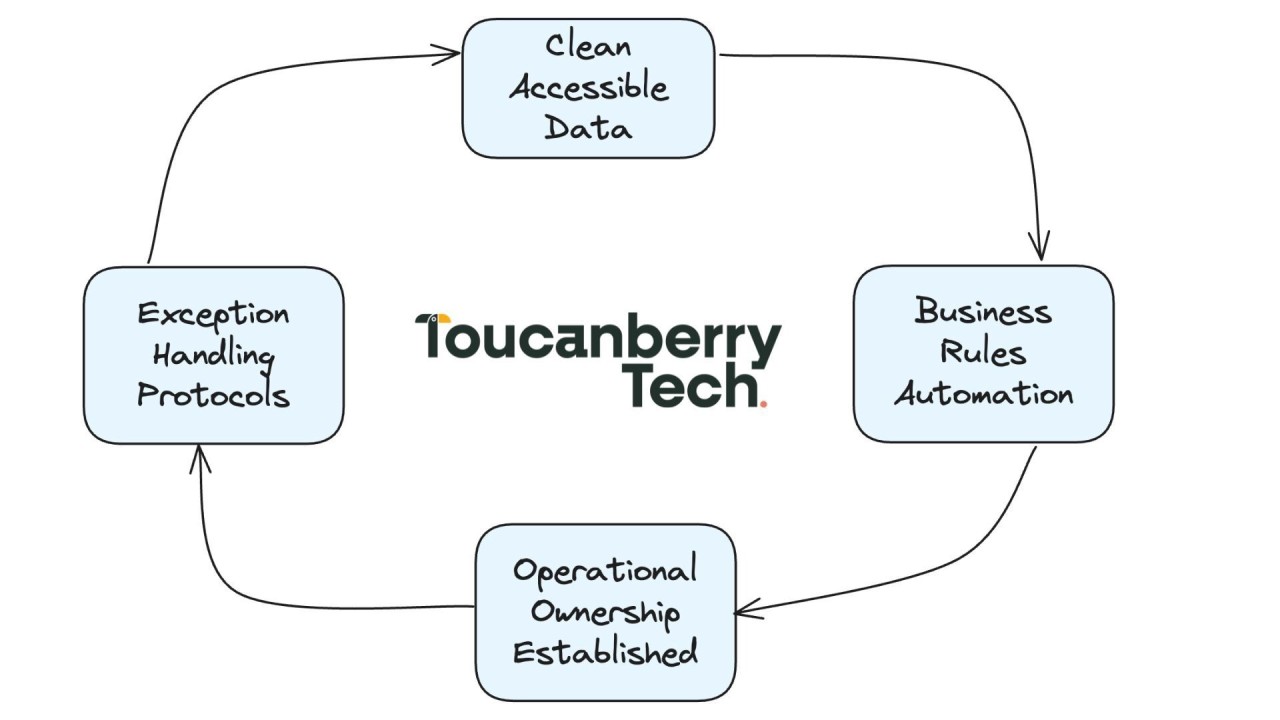
- Programmatic data access: Systematic access to asset positions through APIs or automated feeds. If you’re still emailing for position updates, automation won’t help.
- Structured data flows: Investment positions tagged consistently — standardised asset classifications, geography coding, and credit ratings that map directly to treaty constraints.
- Executable business rules: Legal paragraphs translated into precise mathematical constraints that work systematically across changing portfolio compositions.
The critical insight? Without a clean, accessible data foundation, any compliance automation just delivers faster wrong answers.
Workflow design over technology
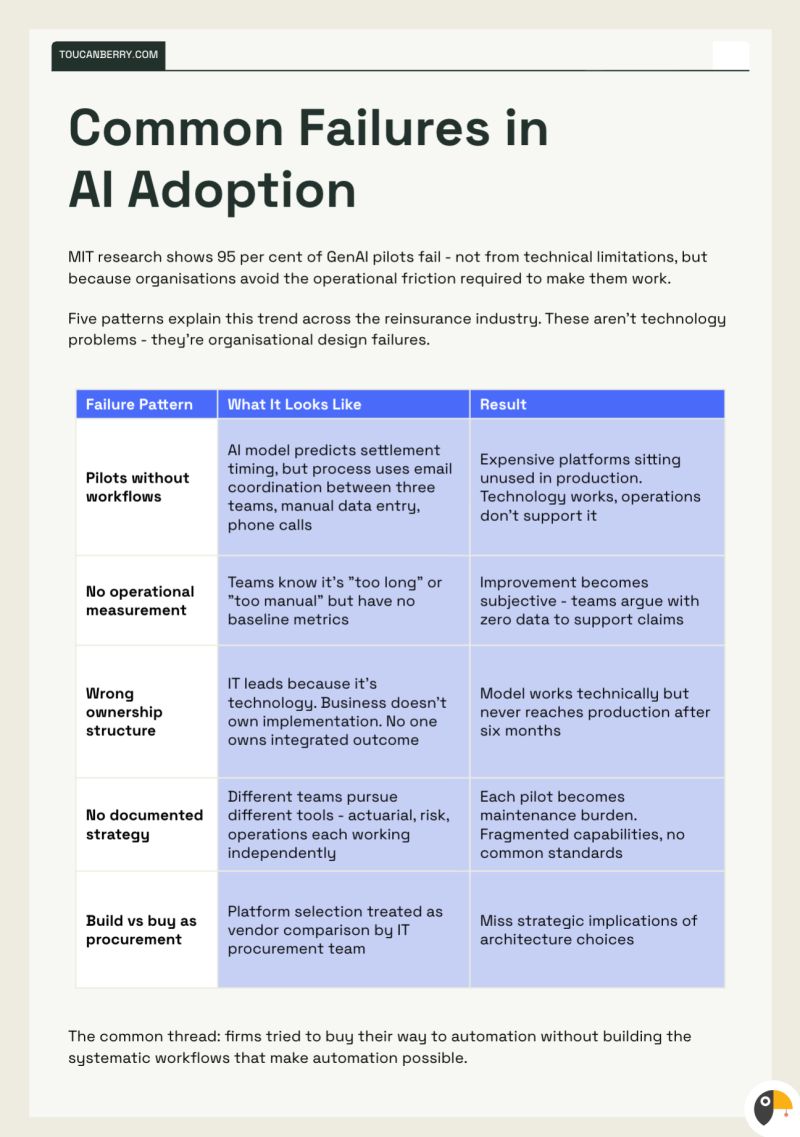
The breakthrough came when Resolution Re mapped their actual workflow and discovered four separate teams handling the same underlying data.
- Fifteen different spreadsheets contained overlapping information.
- Sixty percent of their time was spent reconciling systems rather than managing risk.
Instead of building a new compliance platform, they focused on connecting existing systems more effectively. This is operational design, not software implementation.
The competitive advantage
Resolution Re’s transformation created measurable results:
-
Daily visibility meant potential breaches were identified and addressed before they became violations. The automated system also eliminated human error from manual Excel processes.
-
Cedants gained confidence in their risk management capabilities, knowing guidelines would be monitored systematically rather than periodically.
-
Most importantly, the team could focus on investment decisions rather than building reports.
Each new treaty doesn’t require proportional increases in monitoring effort. The system creates genuine economies of scale — operational costs grow much slower than business volume, delivering compounding efficiency gains as the business expands.
In Bermuda’s concentrated market, this operational capability becomes visible quickly. The difference between firms that can onboard new business efficiently and those constrained by manual processes creates sustainable competitive advantage.
Building the foundation
The path forward doesn’t require massive system replacement.
Start by mapping your current workflow and identifying the most time-intensive manual processes. Focus on data foundation first — if you can’t access your asset positions programmatically, that’s your starting point.
Only after you have clean, accessible data should you consider automating business rules. The goal isn’t to replace human judgement but to eliminate routine manual work.
Treaty compliance automation isn’t all about technology sophistication. It’s about operational design that creates competitive advantage while reducing existential risk.